What kind of rug; Tribal or City rug?

Before purchasing a rug, here are a few suggestions that I would like to share with you to make an informed decision.

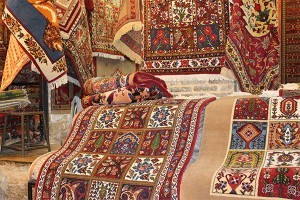
City rugs: Finely woven carpets with intricate designs laid down by master weavers in workshops throughout the major producing cities. The city rugs are more realistic in the motifs that they use. That is, the drawing is curved more naturally, when there are flowers, they are more immediately recognisable as such, where there are pictorials, it is the same situation. For instance Hereke and Kayseri are from the Turkish city rugs group. Isfahan, Kashan, Kerman, Nain, Tabriz, are from the Persian city rugs group.

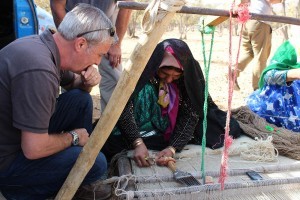
Tribal rugs: Conversly tribal carpets employ more geometry in their designs. Elements are more figuratively represented, animals and people are blockier, and there are more sharp squares and various polygons in the designs. For instance Milas, Dosemealti, Canakkale are from the Turkish tribal rugs group and Bakhtiari, Gabbeh, Hamadan, Bijar are from the Persian tribal rugs group.

Can I use different rugs in the same room?

  • You can use rugs of different patterns in the same room as long as the colours coordinate.
  • Using two rugs of the same size may tend to divide the room in half. Select rugs of differing sizes to create more interest and contrast.
  • To make your decision easier, many rug manufacturers make rugs in different sizes that are designed to coordinate with each other.
Posted in Uncategorized | Leave a comment

Buying Turkish Rugs in Turkey

After a recent trip to Turkey, I would like to share my experiences in the art of haggling for rugs in the Grand Bazaar in Istanbul.

Some people seem to think that bargaining is beneath them, or they get angry when a price they suggest is rejected. Others won’t bargain for fear of getting ripped off; a classic example of nothing ventured nothing gained. And there are those who’ll haggle hard to drive a price right down, then walk away without buying.

Once you begin to bargain it means you’ve already decided to buy, at an appropriate price. The seller knows that but doesn’t know your price. And you don’t know his, although you both know the first sum to be mentioned will be ridiculous. This it what makes bargaining such fun. It’s also a fantastic learning experience over many cups of tea.

Go shopping in Turkey early in the morning because it is good luck for the merchant to make the first sale of the day.

Don’t show interest in the item you actually wanted. Haggle over something else then mid-way through your negotiations casually turn your attention to your “preferred” purchase in an off-handed manner while still showing some interest in the original one. It will throw the stall-keeper off.

Never rush! The merchant spends most of his life engaged at this level so don’t feel bad about taking your time.

The art of haggling demands that you learn to feign indifference. Gushing over a rug then asking its price is a disastrous approach!

If you have a local contact in Turkey, do what I did and ask them as to how much they usually pay for something.

And remember; if you bargain yourself senseless over every dollar, you sacrifice a lot of the joy of travelling.

Posted in Uncategorized | Leave a comment

Kelim (Kilim)

Kelim (Kilim) is considered the oldest type of hand-woven rug. It is firm and strong and can be used on the floor without injury.

In the rug market, now more than ever before, there are many designs and colours of kelims and kelim-like rugs from which to choose.

Kelims have a flat weave and no pile at all. They are made of wool. The yarn is twisted so tightly that when woven it can resemble heavy linen.

The designs are generally geometric. Colours are rich with several contrasting shades, but in decided harmony.

In certain rug weaving countries (e.g Iran), kelims, because of its soft texture, serve many purposes: Floor coverings, blankets, curtains, hammocks for babies, horse blankets, saddle bags, tent doors, even for wrapping bales and bundles.

Today kelims and kelim-like rugs are woven in many different parts of the world and they make a wonderful addition to any home. They are certainly worth considering when looking to purchase a new rug.

Posted in Uncategorized | Leave a comment

Antique Sarouk rug

Here at RugWash we are always excited when a nice old Persian or Oriental rug comes into our rug plant. So you can imagine our delight when we had the opportunity to clean and repair a Sarouk rug estimated to be approx. 120 years old. Our customer was absolutely delighted with the end result and has some other rugs in her collection that we will be cleaning soon.

The Sarouk rug is named after an obscure village 30kms north of Arak (Sultanabad) on the western fringe of the Ferahan Plain in Iran. Although most of these carpets were undoubtedly produced in other villages or in Arak itself, they are still known by the original Sarouk label, which has become something of a trade name. Other weaving centres in the Arak province are Ferahan and Lillihan.

They apparently bagan to appear in quantity during the 1880′s as a response to demand from Tabrizi merchants and Western markets. A few specimens that could clearly be described as Sarouks show dates from the last quarter of the nineteenth century. The Sarouk soon became well established and was sought by both Americans and Europeans.

Production continued until World War 1, when the European market was closed, and the industry suffered a momentary decline. When it revived to meet the great American demand of the 1920′s, the product was of an entirely different nature. Which was the advent of the “American Sarouk” . These Persian Sarouk rugs were made specifically for the American market, whose taste required a thicker pile. An aggresive chemical washing was given to American Sarouks. the deep rose coloured fields of these rugs were chemically stripped and re-dyed dark burgundy by hand in the United States.


Posted in Uncategorized | Leave a comment

Wool Quality

The quality of a Persian rug is based primarily on the quality of the wool and in a very old rug on the pigment with which it is dyed. Good wool means longer life and a more beautiful natural patina. Also, the fact that the wool is spun by hand, the raw wool is not torn into the smallest threads in a willowing machine as in most machine made rugs – makes for durability.

The wool in different sections of Iran varies greatly. In the desert and dry lands the sheep do not grow the thick, heavy coat that the sheep of the colder mountainous districts and the well watered plains of Northern Iran grow. Also, the shearing and sorting of wool is an importent item, since the quality varies even on the same animal. Sheep’s wool and lamb’s wool also vary greatly in quality. Wool is actually modified hair. Each fibre contains certain cells.  Wool also has a protein fibre in it called Keratin, that can attract moths. They can lay their eggs and the larvae will eat the protein fibres to survive and turn into a moth.

Many other points enter into determining the quality of the wool. For instance, as a rule, the Spring clipping is usually a better and stronger wool than the Autumn clipping.

Skin Wool or dead wool

This means wool taken from a sheep that has been butchered. The method often used is to use lye which permits the wool to be scraped off with a knife with ease. Naturally, the wool fibres are damaged and a rug made up of such wool will wear thin in a few years. This wool has a dry and dead feel to touch and be quickly detected if used extensively in a rug. If only used in a portion of the rug, even the expert dealer may miss it and you may find your rug getting thin in spots in a few years. In saying this, it is uncommon for this method to be used in the weaving of rugs. But it is worth knowing about.

Posted in Uncategorized | 1 Comment

Exquisite Savonnerie

We at RugWash were fortunate recently to wash a large Savonnerie rug (4.6m x 3.2m) for Mrs Carter.  The Savonnerie are quite rare but very beautiful and have an interesting history that we would like to share with you.

The reign of Henry IV of France (1589-1610) is marked by policies and public works implemented to improve the country and the life of his people.  He is credited with greatly furthering the development of the arts and crafts of France. During his reign, the methods to create hand-knotted carpets were introduced to France by the weaver Pierre Dupont and became an important industry during the reign of Henry IV’s eldest child, Louis XIII (1610-1643).  The west’s fascination with rugs from the Orient and the desire to keep the gold and silver being spent on these imports in the country drove Dupont and French kinds to establish their own hand-made rug industry.

Initially, Dupont set about his work at the Louvre where talented artisans could flourish under royal patronage. In 1626, for financial e, Pierre Dupont and Simon Lourdet, a former apprentice, formed a partnership to produce rugs. In 1627, the Savonnerie rug factory was established in a former soap making facility in Chaillot outside Paris. The term Savonnerie means “soap works or soap factory”.

Today, the Museum of Modern Art in Paris is located at this site. The partners were granted a patent by Louis XIII in 1627 which protected them by prohibiting the importation of oriental or other foreign rugs into France. Only rugs made in France could be bought and sold in the country while Dupont and Lourdet could purchase the materials needed for their weaving from wherever they chose. This patent was granted for 18 years.

In the late 1660s, the Savonnerie rug came into its own with two projects commissioned by Louise XIV totaling 106 carpets. In 1825, the Savonnerie works were moved to the Gobelins factory in Paris where it is now operated by the French Ministry of Culture.

Posted in Uncategorized | 1 Comment

RugWash – Certified Master Rug Cleaner in Australia

RugWash’s owner, Stephen Muncey, has achieved a first for the Australian rug cleaning industry by achieving Master Rug Cleaner certification. 

Anyone who has spoken to Stephen about their rug is aware of his true passion for rugs and the industry and his extensive knowledge across a broad range of rugs. 

As the owner of RugWash for over five years, Stephen’s industry knowledge has grown and extended the rich RugWash history which dates back to 1957.  There is no doubt that the business was different back then in the respected hands of its founder, Hans Fischer but over the past several years Stephen has ensured that it has kept pace with industry innovations by taking the time to attend international educational courses such as the Dallas based Master Rug Cleaner course.

The Master Rug Cleaner course (co-ordinated by Ellen Amirkhan and Aaron Groseclose) provides the opportunity for industry professionals to extend their knowledge of rugs and the specialised cleaning of rugs. 

Of course, there are many other attributes that combine to ensure excellence in service such as specialised plant and equipment and, most importantly, an honest interest in the beauty and care of rugs.  

The Master Rug Cleaner certification is just another way of ensuring that our valued Brisbane customers receive the service that they deserve.

“RugWash – Brisbane’s only professional rug cleaning plant”

Posted in Uncategorized | Leave a comment

The Use of Persian (Oriental) Rugs in Iran

Many of us are collectors of persian rugs – whether they have been passed on from loved ones, are memories of overseas travel or simply as an investment.  Regardless of how the interest in rugs initially formed, once it is established it remains and, as we have found from talking to the many people who trust RugWash with their prized possessions, the thirst for additional knowledge grows.

We hope you enjoy our article on the use of rugs in Iran.

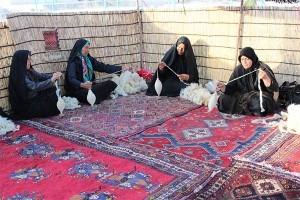
People in Iran do not consider rugs as mere floor coverings.  They have many different uses for them such as room dividers, furniture coverings, drapes as well as table covers.

Picture rugs are hung like oil paintings, cushions are made of fine rugs, pocket-books and saddle-bags are woven for travelling and for children to carry their school books.

Long and narrow rugs are woven for mosque pillars. Fine carpets are spread before a seat of honour.

It is a gesture of respect to greet a dignitary by spreading rugs two blocks long as an act of welcome. The finest rugs are selected by the Government as official gifts,such as the persian (oriental) rug in the United Nations.

Certain quality rugs are still bought and stored in the homes of the wealthy as a sure and profitable investment. The degree of a family’s wealth is apparent by the quantity and quality of rugs they use in their formal living room.

Posted in Uncategorized | 2 Comments

Rug Auctions

Anyone purchasing a rug at an itinerant auction should beware of paying more than the rug may be worth.

When the novice consumers of oriental rugs venture into the world of itinerant auctions, they should realise that they are exposed to the expert-actor-like auctioneer.  The expert auctioneer is interested in making a quick sale only.  He is not interested in the quality or the type of the rug. 

Once you buy the rug from them, you can’ expect any other srevice. If you are not happy with the rug you cannot return it for a refund or exchange it for another rug.  In fact, often the auction is held at a hotel or somewhere similar and so there will be nobody there to listen to your complaint.

You can buy your oriental rugs with confidence only when you buy them from a reputable and established store or from a local merchant whom you trust.  Of course, there are many reputable auctioneers and also many opportunities to purchase a beautiful rug from, for example, a full-house furniture auction.

Remember – “if you don’t know your oriental rugs, be sure you know your dealer”.

Posted in Uncategorized | Leave a comment

How to Buy an Oriental Rug

An oriental rug can be a once in a lifetime purchase. It is no longer a luxury, but it is an important item in furnishing a home.

People generally buy the best oriental rugs they can afford. There are many grades and qualities of oriental rugs available in the market from which to choose.

The most important purpose for buying an oriental rug is to USE it and ENJOY it.

When leaving the house with the intention of purchasing an oriental rug, have your room measurements in your pocket. Also have in mind your favourite colour. An oriental rug should fit the room decor harmoniously.  Perhaps take some photos on your phone so that you can show the rug merchant.

Oriental rugs should be purchased on the principal of what looks best in your home and what is most appealing to your eye.  When you find the one rug for your home which expresses your personality best, it is sure to give you the feeling of warmth, intimacy and comfort.

Oriental rugs should be brought in a relaxed atmosphere and under the proper lighting conditions. It is important to view the carpet you intend to purchase in night light as well as day light – and in the surroundings in which it is to be used. Be sure to try the carpet in your home before making the final decision.

It is always wise to buy your oriental rugs from your local oriental rug merchant. Usually the salesperson has had years of experience and is willing to share it with you.  They are always willing to show you many pieces from their large selection and also often will be willing to let you take a rug (or even several) home to try in your own home.

Posted in Uncategorized | 1 Comment